
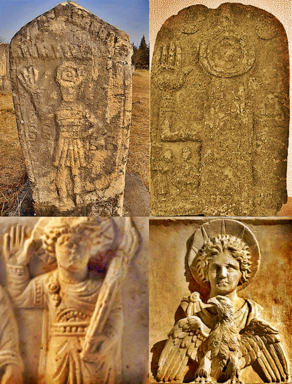
 Schindler’s Religion of Illyrian (“Slavic”) Sun-god Dazhbog (a stećak near Stolac, upper left) spread throughout the World: into Syria as Sun-god Shamash (Palmyra, 150 BCE, bottom-left), Old Rome as Sun-god Sol Indiges whose worshipers in the late Roman Empire (1-3 century CE) formed what is today regarded as a “mysterious religion of Sun-god Mithra” (bottom-right), into western China (undated tombstone, top-right), prehistoric Egypt (6000-3100 BCE) as Sun-god Amun Ra that later on became Horus or just Ra (not shown), into Celtic lands as Sun-god Belenus (3rd c. CE), into India, etc.

Escutcheon seal of Illyria . Four regal scepters symbolize the Fourth Kingdom as Illyrians saw what we call today Ancient Greece – a view that was later adopted by Protestants based on the Book of Daniel. Stećak from Daorson near Stolac (top), versus ancient hydria, c. 530 BCE, Museum Louvre, France (bottom), whose origin has not been precisely determined but which carries the seal of manufacturing province: Greek Illyria (Illyria under Old Greece). A manufacturer seal on luxurious amphorae had the same role as a mint seal on coins. A scepter was often shaped as ram horns – a favorite religious symbol (of power and fertility) since times before Antiquity, when a ram was a common sacrifice (scapegoating was one of the purposes of stećci as well). Just like with all cross-like coats of arms and seals from ancient eras, the Church has hijacked this symbol too and called it “anchor cross” (cercelée), while merely describing its looks according to what it reminded them of, without providing an explanation so it is obvious the symbol is not Christian originally. So they created an entire tale in which the cross “commemorates St. Clement” (the Church’s very first saint no less), whose “killers had tied an anchor around his neck and threw them both into the sea” – one can tell by that reaching for the earliest physically possible time in Church’s history to fake the origin of a cross (suitably named “sailors’ cross”), that in fact this cross was the most important coat of arms of Rome’s archenemies. Given the level of effort that took Rome to conquer (in fact: close a rather humiliating peace treaty with) Illyrians, those archenemies could only be – the Illyrians. (It is worth noting that a western fake encyclopedia – Wikipedia – as a modern tool for global information control – cuts off photos of antique amphorae so that the seal of manufacturing province is not seen.)
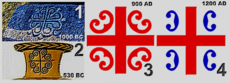
The Escutcheon of Illyria got transformed with time into “Byzantine” and Serb Escutcheon.

Ancient Greek mythological motif on a stećak (Pržine near Ljubuški), with the depiction of Trojan war (1200 BCE ?) – Iphigenia in golden carriage observing her father King Agamemnon killing the holy deer in a field encircled from all sides by braiding of thunder (war) in the astronomically described era of Trojan war. Ljubuški is situated on the outskirts of Trojan war theater, according to archaeologist R. Salinas Mythological motifs were merely a method for depicting history lapidary (“in stone”) using metaphors; but, Trojan war was just an aggression by which Greece colonized Illyria for the first time.

Ljubuški, outskirts of Troy war theater, according to archaeologist Roberto Salinas Price.

Phrygian (Brygian) cap on stećci, aka Liberty cap. The Phrygi or Bryges (or Brigi, meaning highlanders in local languages) were one of the three main Trojan (Illyrian) tribes in Trojan war according to Homer’s epic Iliad. In the top depiction of Trojan dance, the players are holding a cloverleaf (the symbol of Illyrian god Triglav meaning Three-head) – a symbol of Trojans. Phrygian cap is a symbol of liberty worldwide, e.g. the Seal of the US Senate.
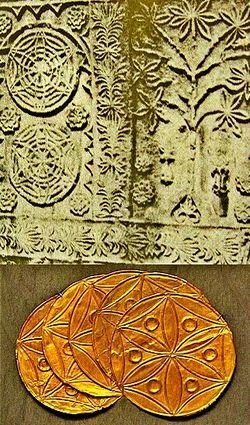
The most picturesque stećak of ancient Bosnia (Zgošća near Kakanj), ascribed to medieval Bosnia. However, the stećak does not feature any symbols from the medieval period. All ornaments on the stećak originated in Antiquity: frequent antiquity motifs Leaf of Life and Tree of Life(top), versus golden Leaves of Life, found in a female tomb at Mycenae, Greece (1600 BCE), from Archaeological Museum in Istanbul (bottom). The displayed stećak is from antiquity and not medieval, as seen from the fact that stone slabs from the walls surrounding ancient city of Daorson near Stolac were too made in the style found in the walls of the Greek city of Mycenae.
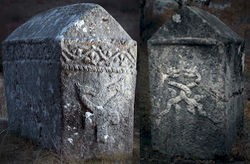
Stećci with motifs added by followers of the Gothic cult of Germanic God of snakes, 7th-9th century, amateurishly interpreted in the UNESCO nomination (and designation as a national monument) as a “depiction of dragons from the 12th century.”] so to place a necropolis in Catholic pilgrimage shrine at Međugorje on the list of World Heritage and thus ascribe another symbol of Old Bosnian Civilization to Catholicism (the necropolis has no clear symbols of Christianity).
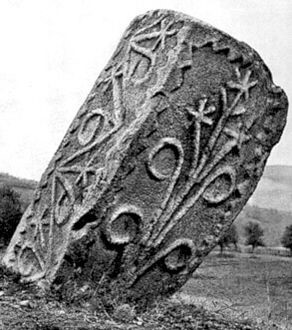
Stećak with an astral motif, probably of 3-taled comet Hyakutake discovered in 1996 as the brightest (having the closest approach to Earth) since the beginning of optical astronomy (around 250 years). Hyakutake could be observed for nearly 6 months day and night with a naked eye, and it is the only known 3-tailed Great comet (20 or so historical comets visible with naked eye day and night). Its orbital period estimated as 17330 yrs means that comet Hyakutake last time passed by the Earth in 6670 BCE, which is then the likely time of engraving of the stećak. Astronomical symbol for a comet ☄ (circle with 3 rays) is of unknown origin, reaches in deep Antiquity and astronomy inherited it from astrology, so the symbol likely represents comet Hyakutake whose earlier spectacular pass-by around the Earth got captured on the above stećak. This means that Stone Age in Bosnia (Illyria) ended before ending in the Middle East – c. 7500 BCE, instead of 5200 BCE as imputed by the schools of thought dominated by Catholic philosophers i.e. scholars who consider Butmir Culture (5200 BCE), although the oldest artistic culture, as merely “imported” from the Middle East, and that it did not develop naturally from creative abilities of Illyrians who in that case could not be considered a civilization and thus antecedent to both Greek civilization and Ancient Rome – in other words as the cradle of today’s Western and other civilizations. The comet sighting was likely source of Illyrian (“Slavic”) theology in which the supreme god Triglav(meaning: The 3-headed) is the highest deity of “Sky, Earth, and Underworld”. Romans (Vatican) plagiarized the supreme Illyrian god (incorporated it into their fake religion) as a doctrine of Holy Trinity: Sun -“Father”, Earth -“Son”, Underworld -“Holy Spirit”.

Ancient Celtic tombstone from Ireland, Bosnian style, the Tree of Life with Sun-on-top motif (old style, before 1200 BCE). One of the proofs that Celts are originally from Bosnia (Illyria), and not Germany as the west-European historiography imputes.
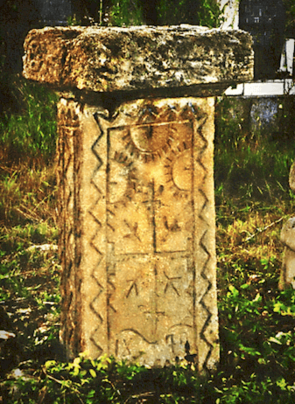
Typical stećak from today’s Serbia, with the same motif as the upper stećak from Bosnia (the supreme Illyrian deity Triglav represented by the metaphor of Three Suns, i.e. a three-tale comet). Stećci of Serbia are more complex in expression and form than Bosnian stećci, making them also more recent. That, together with a significantly greater number of Bosnian stećci (the Illyria Proper, after J. Wilkes) of over 85% relative to the neighboring countries, constitutes one of the proofs that the Old Bosnian (Illyrian) civilization spread from Bosnia outward in a radial fashion, first to today’s Serbia, the Danube basin, and further.
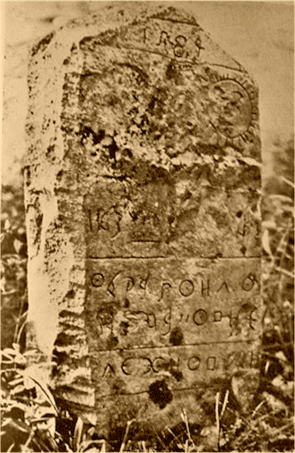
Stećak near Jelašak, Olovo, Bosnia. Stećak destroyed by the Church in the 1960s, under the pretext of “expansion of the Catholic cemetery”. The specimen contained astral motifs and an unknown lettering with numerous glyphs shared with the Tartaria-Vinča script (5500-5200 BCE) and the unknown script of the Harappa culture, India (3300-1300 BCE). The text was titled “ILOS” – Greek for Ilus, the founder of the city of Ilios (lat. Illium), that later became known as Troy. Homer in Iliad mentions “The tomb of Ilus, son of Dardanos, in the middle of the Troy lands”. Great Germanic imperialism through Vuk Karadžić, who was on Austria’s and Germany’s payroll, imposed a grammar and spelling that suited that imperialism – by the expulsion of “Greek” letters as a key proof that the Illyrian (Vinčan) script, which is also found on stećci like the one depicted above, was the origin of ancient literacy including Eastern.
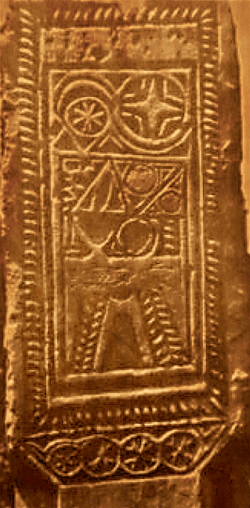
Stećak from Žgošće near Kakanj, Bosnia, with motifs of ancient astrology. It also contains a common symbol of the Star of the North (top right), usually depicted in ancient scrolls as letter x with four “crescent moons” (in fact, highlighted stellar rays, as the observers saw it with the naked eye in the night sky). In a simplified form, the symbol resembles the coat of arms of Illyria, but it is merely a prayer mark expressing a desire for happiness and success. Namely, the coats of arms of pre-Antiquity and Antiquity states are exclusively connected with kings and their dynastic symbols such as scepter, crown, throne, etc., but not with astral symbols that belonged exclusively to clergy and religions as official insignia.

Illyrian city Dillultnnum (Hutovo city), at the site of a prehistoric settlement, with so called 3 necropoleis of stećak tombstones. An ancient road connects it to another Illyrian city Daorson nearby. The ancient noun is a Latin mocking riddle: di ult num (“Do the gods last?”) by which the Church mocks the Illyrian polytheism after the Romans demolished the city. Some facilities were added in the 18th century.
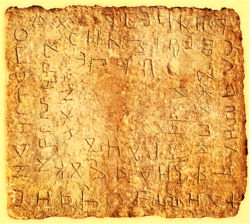 The Hum tablet found near Ljubuški in Southern Bosnia, which some place in the 10th century and consider the oldest document of literacy in Bosnia, claiming that it was written in Bosančica (the Bosnian version of the Cyrillic alphabet). However, only a minor part of the text can be deciphered by Bosančica, while the incomplete translation gives illogical words and location names that do not exist in post-Antiquity Bosnia. On the other hand, the Hum tablet shows some similarities with the Vinča script, while sharing some glyphs as well.
The first step towards destruction of a nation is destruction of its memory. Destroy its books, culture and history and then find someone to write new books, invent a new history. Such a nation will soon start to forget what it is and what it was.
Arthur Schlesinger
 Želim da skrenem pažnju da smo postojali i prije nego sto smo postali srbi, muslimani, hrvati, bošnjaci i ostali. Bili smo jedan moćan narod sa svojim jezikom, znanjem, duhovnim školama, spomenicima i sjećanjima za koje nas ubjeđuju da su nešto drugo …
 Damir na divanu
Good post. I learn something totally new and challenging on websites I stumbleupon every day. It will always be useful to read through content from other writers and use a little something from their websites.
LikeLike
You should take part in a contest for one of the most useful websites online. I’m going to recommend this website!
LikeLike
Hi, I think your site may be having web browser compatibility issues. When I take a look at your blog in Safari, it looks fine however when opening in I.E., it has some overlapping issues. I merely wanted to provide you with a quick heads up! Other than that, fantastic blog!
LikeLike
I blog frequently and I genuinely appreciate your content. The article has really peaked my interest. I am going to book mark your blog and keep checking for new details about once per week. I opted in for your RSS feed too.
LikeLike
Aloha! Such a nice post! I’m really enjoy this. It will be great if you’ll read my first article on Programming Insider!)
LikeLike
Greetings! Very helpful advice within this article! It’s the little changes that will make the most significant changes. Many thanks for sharing!
LikeLike
I wanted to thank you for this wonderful read!! I certainly loved every little bit of it. I have you book-marked to check out new things you postÖ
LikeLike
Hello! I just wish to give you a huge thumbs up for your excellent info you’ve got right here on this post. I will be coming back to your web site for more soon.
LikeLike
I could not resist commenting. Exceptionally well written!
LikeLike
I was pretty pleased to discover this page. I want to to thank you for your time for this wonderful read!! I definitely appreciated every bit of it and i also have you book marked to see new stuff on your web site.
LikeLike
You should take part in a contest for one of the greatest sites on the web. I will highly recommend this web site!
LikeLike
This is the perfect website for everyone who would like to find out about this topic. You understand a whole lot its almost tough to argue with you (not that I personally will need toÖHaHa). You certainly put a brand new spin on a topic that’s been written about for years. Wonderful stuff, just excellent!
LikeLike
You need to take part in a contest for one of the finest sites on the web. I will recommend this blog!
LikeLike
Everything is very open with a very clear clarification of the challenges. It was really informative. Your site is useful. Many thanks for sharing!
LikeLike
Itís hard to come by experienced people about this subject, but you seem like you know what youíre talking about! Thanks
LikeLike
An outstanding share! I have just forwarded this onto a co-worker who was doing a little homework on this. And he actually ordered me breakfast due to the fact that I discovered it for him… lol. So allow me to reword this…. Thank YOU for the meal!! But yeah, thanx for spending time to talk about this subject here on your site.
LikeLike
I like it when individuals get together and share views. Great blog, stick with it!
LikeLike
Way cool! Some very valid points! I appreciate you writing this post plus the rest of the website is also really good.
LikeLike
This site was… how do you say it? Relevant!! Finally I’ve found something that helped me. Appreciate it!
LikeLike
This page definitely has all the information and facts I wanted about this subject and didnít know who to ask.
LikeLike
I was very pleased to discover this great site. I want to to thank you for your time due to this fantastic read!! I definitely appreciated every bit of it and i also have you book marked to look at new information in your site.
LikeLike
Greetings! Very useful advice within this article! It is the little changes that will make the biggest changes. Thanks a lot for sharing!
LikeLike
Iím amazed, I must say. Seldom do I come across a blog thatís both equally educative and entertaining, and let me tell you, you have hit the nail on the head. The issue is something which too few folks are speaking intelligently about. Now i’m very happy I found this during my hunt for something regarding this.
LikeLike
Having read this I believed it was really enlightening. I appreciate you finding the time and effort to put this content together. I once again find myself personally spending way too much time both reading and posting comments. But so what, it was still worthwhile!
LikeLike
I like it whenever people come together and share ideas. Great site, continue the good work!
LikeLike
This website was… how do you say it? Relevant!! Finally I have found something that helped me. Thanks a lot!
LikeLike
I enjoy reading a post that will make people think. Also, many thanks for allowing me to comment!
LikeLike
I could not resist commenting. Exceptionally well written!
LikeLike
May I just say what a comfort to find a person that genuinely knows what they’re talking about on the internet. You certainly understand how to bring a problem to light and make it important. More and more people have to read this and understand this side of the story. I was surprised that you aren’t more popular because you definitely have the gift.
LikeLike
Having read this I thought it was very enlightening. I appreciate you finding the time and energy to put this information together. I once again find myself personally spending way too much time both reading and commenting. But so what, it was still worthwhile!
LikeLike
Nice post. I learn something new and challenging on blogs I stumbleupon every day. It will always be interesting to read content from other authors and use something from their web sites.
LikeLike
Howdy! This article could not be written much better! Reading through this article reminds me of my previous roommate! He always kept preaching about this. I am going to send this article to him. Pretty sure he will have a great read. Thanks for sharing!
LikeLike
Spot on with this write-up, I truly think this web site needs a great deal more attention. Iíll probably be back again to see more, thanks for the information!
LikeLike
This is a topic that is close to my heart… Cheers! Where are your contact details though?
LikeLike
Hi, I do think this is an excellent website. I stumbledupon it 😉 I am going to revisit once again since I book-marked it. Money and freedom is the greatest way to change, may you be rich and continue to help others.
LikeLike
You should take part in a contest for one of the highest quality sites online. I most certainly will highly recommend this site!
LikeLike
This website really has all the information I needed about this subject and didnít know who to ask.
LikeLike
There is definately a great deal to learn about this issue. I love all the points you’ve made.
LikeLike
This is a topic that’s near to my heart… Thank you! Where are your contact details though?
LikeLike
Hi, I do believe this is an excellent site. I stumbledupon it 😉 I’m going to come back yet again since I book-marked it. Money and freedom is the greatest way to change, may you be rich and continue to help others.
LikeLike
I really like it whenever people come together and share opinions. Great blog, keep it up!
LikeLike
I’m excited to find this great site. I wanted to thank you for your time due to this wonderful read!! I definitely liked every bit of it and i also have you saved to fav to look at new information on your blog.
LikeLike
Hello! I could have sworn Iíve been to this website before but after browsing through some of the posts I realized itís new to me. Regardless, Iím definitely happy I stumbled upon it and Iíll be bookmarking it and checking back regularly!
LikeLike
Oh my goodness! Incredible article dude! Thanks, However I am encountering difficulties with your RSS. I donít know the reason why I can’t join it. Is there anybody getting the same RSS issues? Anyone who knows the answer can you kindly respond? Thanks!!
LikeLike
Hello there! I simply want to give you a big thumbs up for the excellent information you have got here on this post. I am coming back to your blog for more soon.
LikeLike
bookmarked!!, I love your website!
LikeLike
The core of your writing while appearing agreeable originally, did not really sit perfectly with me personally after some time. Somewhere within the paragraphs you managed to make me a believer unfortunately only for a very short while. I however have got a problem with your jumps in assumptions and one might do nicely to fill in all those gaps. In the event that you actually can accomplish that, I will undoubtedly end up being fascinated.
LikeLike
Good post. I learn something new and challenging on websites I stumbleupon every day. It will always be helpful to read articles from other writers and use something from their web sites.
LikeLike
Everyone loves it when people come together and share opinions. Great blog, stick with it!
LikeLike
This is a really good tip particularly to those new to the blogosphere. Brief but very precise infoÖ Many thanks for sharing this one. A must read article!
LikeLike